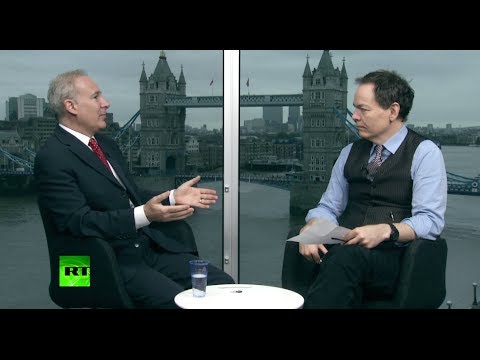
“Cody Wilson of Defense Distributed talks about the project and the implications of 3D printing and cryptography on politics and the nation-state.”

“Cody Wilson of Defense Distributed talks about the project and the implications of 3D printing and cryptography on politics and the nation-state.”

“In this episode of the Keiser Report, Max Keiser and Stacy Herbert discuss drinking the kool aid (never mind the cyanide) while the young and unemployed of Ireland are encouraged to emigrate by government economists determined to flatter their Troika stats. In the second half, Max interviews author and investor, Peter Schiff, about inflation in fraud as governments want a cut of financial crimes and the trickle down monetary policy ponzi scheme.”
“Upstart Microsoft didn’t fear giant IBM … upstart Google didn’t fear giant Microsoft … upstart Facebook didn’t fear giant Google … and some unknown upstart who is working in his garage at this very moment doesn’t fear giant Facebook. Nor should you fear giants. Never forget that you have many advantages over the big guys, one of the most important being that you can move much more swiftly than elephants like IBM, Microsoft, Google, and Facebook. After all, they are under tremendous pressure to build more and more lung capacity just to be able to absorb enough air. While the giants are huffing and puffing to fend off predators, you have the luxury of concentrating on action.”

“I walked into a Subway sandwich shop and noticed a big change in the menu. I noticed that the list of sandwiches in its $5 menu keeps shrinking. Pretty soon, Subway will have to come up with a new name for its menu. This is also happening at other fast-food restaurants. In January, Wendy’s turned its $0.99 menu into a ‘Right Price, Right Size’ menu. And, recently, McDonald’s announced it’s turning its $1 menu into a ‘Dollar and Up’ menu. These price hikes seem like inconsequential changes. But they represent something bigger … Without its $1 menu acting as an anchor, McDonald’s is now free to start passing along its higher input costs to consumers in the form of rising prices.”
http://thesovereigninvestor.com/2013/11/11/fed-killing-middle-class/

“Alisher Ali knew on the morning of his second day in Myanmar that the long-closed country was a risk worth taking. Less than two months later he moved his wife and four children to crumbling, tree-lined Yangon and opened Myanmar’s first-ever investment bank with $1 million of his own money. This places him in sparse company. While many chatter about the economic potential of one of the world’s last frontier markets, very few foreigners have actually set up shop. The first thing Ali had to do was explain to people in Myanmar, including some of his new employees, what an investment bank is.”
http://news.yahoo.com/myanmar-gets-first-investment-bank-072002469.html
“The advertisements underscore Singapore’s nascent role as a magnet for Myanmar companies eager to grow as their country emerges from decades of isolation but frustrated by its crippled banking system and barely existing financial markets. The country does have an over-the-counter bourse, the Myanmar Securities Exchange Centre (MSEC), but it has only two listed firms. When the stocks are traded, which is very rarely, payments are normally made in cash. A few companies have gone public, but not on the MSEC. Instead they sell shares from their offices or even in public places, letting people know by taking a newspaper advertisement or just through word of mouth.”
http://in.reuters.com/article/2013/11/11/myanmar-singapore-listings-idINDEE9AA0DA20131111

“Myanmar is facing big problems to implement a stock exchange including the need for skilled workers, according to Deputy Minister for Finance and Revenue Maung Maung Thein. The challenge is to have enough employees who have the necessary skills to organise Stock Exchange Commission (SEC), to have building for stock exchange, to have basic infrastructure of information and technology, to give members of commission and staff for advance training and to educate public companies listed in stock exchange, the deputy minister pointed out. At present, Myanmar has about five companies who possess these essential qualities to be included in the stock exchange.”

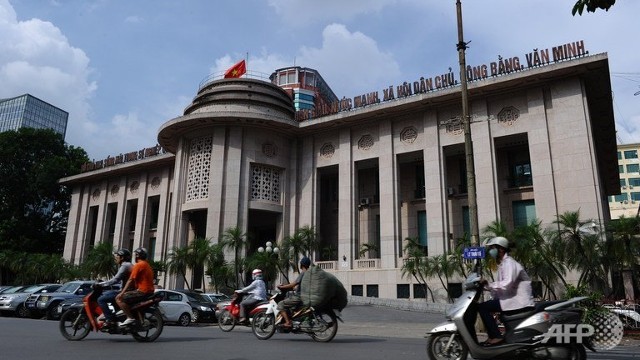
“Vietnam’s stock market may end the year among Asia’s top performers, after a 20 per cent rebound so far. Relatively low valuations make Vietnam’s stock market among the cheapest in the region while year-to-date returns have been handsome. Second only to Pakistan in stock market returns this year, analysts say Vietnam is winning back much of the confidence it had lost. As a competitor for foreign money to neighbouring Myanmar, analysts say Vietnam may be due for a second wind. Overshadowed on some levels by Myanmar, Vietnam is making a comeback of sorts. The government’s shift from pro-growth to pro-stability has eased inflation and improved the country’s trade balance.”
http://www.channelnewsasia.com/news/business/international/vietnam-s-stock-market/878550.html

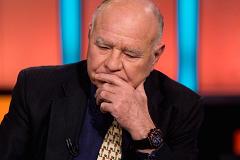
“A credit boom in countries such as China means that the world is in a worse position than it was in 2008 when a global financial crisis tipped the world into recession, Marc Faber, editor and publisher of The Gloom, Boom & Doom Report, told CNBC. ‘If I am telling you that we had a credit crisis in 2008 because we had too much credit in the economy, then there is that much more credit as a percent of the economy now,’ Faber said. He referred to a recent report by former Bank for International Settlements chief economist William White which said that total credit in advanced economies is now 30 percent higher as a share of gross domestic product (GDP) than it was in 2007.”

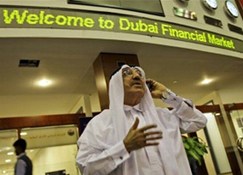
“If the best of the gains, or certainly the easy money, is in for property then the Dubai stock market is the next place to look. All right it is up 65 per cent this year but its index is still down by about 65 per cent on its all-time high of early 2006. Key stocks trade on market valuations that are half that of comparable shares on Wall Street. And where are the real growth prospects for business profits over the next few years? The high growth UAE or the low growth USA? IPOs in the UAE are therefore interesting investment opportunities again. It is also far more interesting for local companies to list their shares again.”