
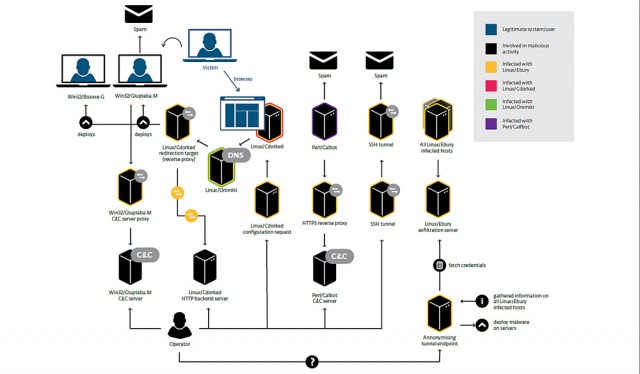
“Until now, publicly known details of the attack were largely limited to its use of a self-injecting rootkit—Phalanx or Phalanx2—to infect kernel.org servers known as Hera and Odin1, as well as personal computers belonging to senior Linux developer H. Peter Anvin. The malware had access to potentially sensitive information stored on the infected machines. A follow-up advisory a few weeks later opened the possibility that still other developers may have fallen prey to the attackers. According to Eset, kernel.org servers were probably infected by a second piece of malware dubbed Linux/Ebury, an OpenSSH backdoor used to keep control of the servers and steal credentials.”

Did you like this?
Tip Freedomwat.ch Staff with Bitcoin
Tip Freedomwat.ch Staff with Bitcoin
Related posts:
ZipZap to Offer Cash-for-Bitcoin Service at 28,000 UK Locations
Europe Puts on Its Rally Cap
Over 50% Of Electric Cars Sold In US Are In 5 Cities
A Treasure Hunt Within a Treasure Hunt
DOJ Demands 1.3 Million IP Addresses Of Visitors To Antifa Website
Bill would establish U.S. national park on the Moon
"Active Shooter" training session, featuring DHS, FEMA, concerns TCC students
Bit of Headache for Paris, Bitcoin Regulation Added to EU Agenda
Documents Suggest Close Relationship Between NSA, U.S. Companies
Poland's Idea Bank Puts Mobile ATM Into BMW i3
Cannabinoid Protects Against Alcohol-Induced Liver Damage
Inside TimeSpace, the New York Times’ new startup accelerator
Maker of Airport Body Scanners Suspected of Falsifying Software Tests
Germany’s Bitcoin.de and Fidor Bank AG form partnership
Cannabinoids Lead to Leukemia Cancer Cell Destruction