
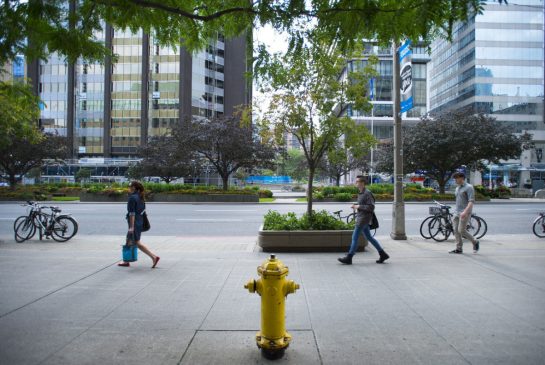
“So, why is this one particular hydrant such a cash cow for the city? There are a few possible explanations. It’s right by the courthouse and near a major downtown intersection. The hydrant itself is in the middle of a busy sidewalk set back some distance from the street, and it would be easy enough for drivers to miss. No markings on the street make it obvious that the spot is off-limits. The fine used to be $30 until the city hiked the fine in early 2008. A Canadian Press analysis of Toronto’s parking-ticket data found the city has collected more than $24 million since 2008 by fining people who parked too close to hydrants. Fabrizi says all parking fines add up to $80 million a year.”

Did you like this?
Tip Freedomwat.ch Staff with Bitcoin
Tip Freedomwat.ch Staff with Bitcoin
Related posts:
TSA and Border Patrol stole his life savings but never charged him with a crime
Pro-Assad hackers target Marine Corps recruiting website
B.C. school bans kindergarteners from touching each other
2nd trial begins for officer accused of robbing motorists
Tanzania Readies Rules to Open Stock Market to Foreigners
Couple files civil lawsuit against former cop who stole their medication
Lawsuit Accuses Fired Utah Trooper of Falsifying D.U.I. Arrests
Apple 'witch hunt' burns VC-backed Bitcoin wallet at the stake
Delaware taxpayers increasingly on the hook as Fisker auto plant idles
Judge Napolitano: Is This Constitutional? The California Nanny State Laid Bare.
Texas bank welcomes concealed handguns
China Confronts Mounting Piles of Unsold Goods
'The Hazards of Lending to Bitcoin Users'
U.S. Says Hawala Enabling Iraq To Help Iran Skirt Sanctions
Consider keeping Bernanke, top Romney adviser says