
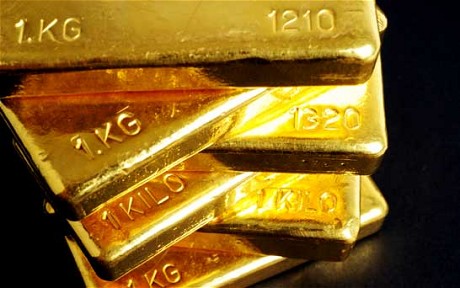
“When Brown decided to dispose of almost 400 tonnes of gold between 1999 and 2002, he did two distinctly odd things. First, he broke with convention and announced the sale well in advance, giving the market notice that it was shortly to be flooded and forcing down the spot price. This was apparently done in the interests of ‘open government’, but had the effect of sending the spot price of gold to a 20-year low, as implied by basic supply and demand theory. Second, the Treasury elected to sell its gold via auction, which frequently achieved a lower price than the equivalent fix price. It seemed almost as if the Treasury was trying to achieve the lowest price possible for the public’s gold. It was.”

Did you like this?
Tip Freedomwat.ch Staff with Bitcoin
Tip Freedomwat.ch Staff with Bitcoin
Related posts:
Ron Paul Discusses His New Channel And The NSA Spying Program
Lawmakers travel the world on lobbyists’ dime
Aussie car start-up hits the road with Bitcoin
Firings Highest Since 2010 as Ford to Dow Face Slump
Feds Searching Record Number of Our Personal Devices at the Border
Mandatory Sentences Face Growing Skepticism
US police departments are increasingly militarised: report
Cop Beaten Up on Camera While Bystanders Watch; No One Calls 911
US tax deal hits profits at Liechtenstein bank by over $23 million
Rumsfeld: Obama hasn’t justified Syria attack
RBS has lost all the £46bn pumped in by the taxpayer
Mexico leader to discuss alleged U.S. spying with Obama
UK inflation jumps 'unexpectedly' in July to 2.6pc
Pentagon linked to Iraqi torture centers by Central American ‘dirty war’ veteran
U.S. criticizes ‘unnecessary’ EU rules on genetically modified crops