
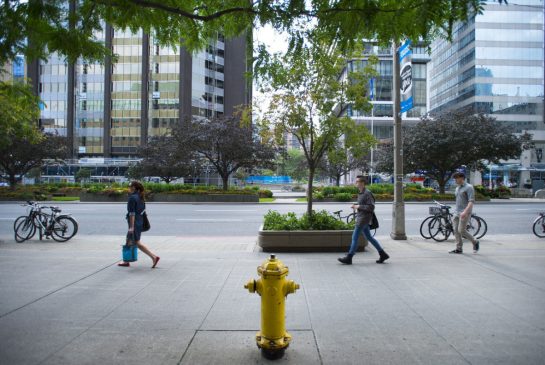
“So, why is this one particular hydrant such a cash cow for the city? There are a few possible explanations. It’s right by the courthouse and near a major downtown intersection. The hydrant itself is in the middle of a busy sidewalk set back some distance from the street, and it would be easy enough for drivers to miss. No markings on the street make it obvious that the spot is off-limits. The fine used to be $30 until the city hiked the fine in early 2008. A Canadian Press analysis of Toronto’s parking-ticket data found the city has collected more than $24 million since 2008 by fining people who parked too close to hydrants. Fabrizi says all parking fines add up to $80 million a year.”

Did you like this?
Tip Freedomwat.ch Staff with Bitcoin
Tip Freedomwat.ch Staff with Bitcoin
Related posts:
US Bid to Contain Russia and Latin America Speeds New Alliances
DEA agents seize black businessman's $16K life savings; no charges filed
Disabled veteran could change U.S. drug policy on medical marijuana
Homeland Security tracks down 400-page diary of Nazi leader and Hitler aide
State Department revokes NSA leaker Snowden's passport
CNN's Morgan Spurlock: Living On Bitcoin
Embargoed EU Goods Actively Re-Imported to Russia via Belarus
Icelanders Protest in Their Thousands as Parliament Sealed Off
Why Progressive defended a client's killer
Kenya’s new cellphone money model could disrupt global banking industry
Iranian dairy company unveils five-ton ice cream tub to break world record
U.S. navigation moves in South China Sea will continue
Alibaba files to sell up to $24.3 billion in stock, biggest US IPO ever
Pentagon linked to Iraqi torture centers by Central American ‘dirty war’ veteran
Subway Founder: 'Wouldn't Exist' If Started Today Due to Regulations, Then Calls For Min. Wage Hike