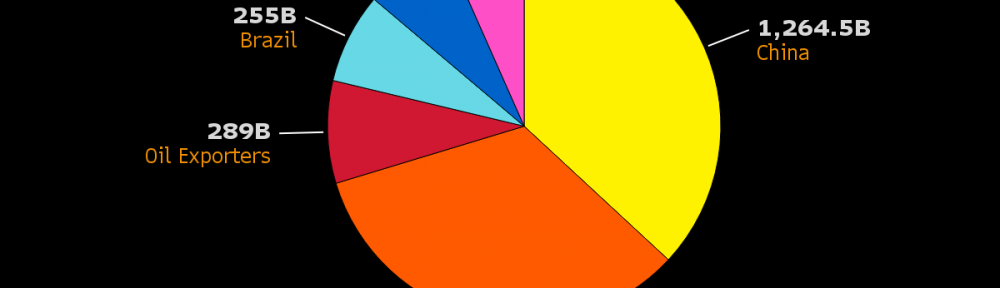

“That question — unanswered since the 1970s, under an unusual blackout by the U.S. Treasury Department — has come to the fore as Saudi Arabia is pressured by plunging oil prices and costly wars in the Middle East. As a matter of policy, the Treasury has never disclosed the holdings of Saudi Arabia, long a key ally in the volatile Middle East, and instead groups it with 14 other mostly OPEC nations including Kuwait, the United Arab Emirates and Nigeria. Apart from the kingdom itself, only a handful of Treasury officials, and those at the Federal Reserve who compile the data on their behalf, have a clear picture of Saudi Arabia’s U.S. debt holdings and whether they’re rising or falling.”

Did you like this?
Tip Freedomwat.ch Staff with Bitcoin
Tip Freedomwat.ch Staff with Bitcoin
Related posts:
Christie administration files suit against 8 businesses accused of price gouging
Coal to Fill China's Nuclear Gap
American teens savvy to smartphone apps that include location tracking
China signals will cut off credit to rebalance economy
Foster parents of separated immigrant children 'don't know how much worse it could be'
Trump slaps tariffs on foreign solar panels and washing machines
Julian Assange says victorious Obama ‘wolf in sheep’s clothing’
Here's What Happened When Google Went Public
Japan Fukushima panel proposals include Tepco breakup
Turkish gold exports rise 800 pct on demand from Iran
Gold Analysts Get Most Bullish in a Year After Rout
Trump Adviser Accidentally Leaks His Own Homeland Security Plan
Car bomb rocks Hezbollah stronghold in Lebanon
How cigarette smuggling fuels Africa’s Islamist violence
What it costs to raise a royal baby