
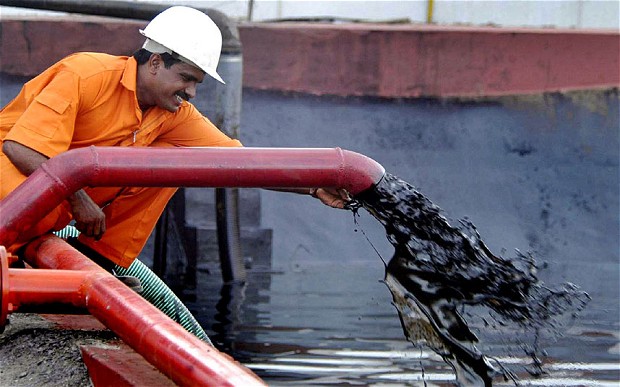
“Libya’s oil output has crashed to a near standstill over the past year as warlords and strikes paralyse the country, tightening the screws on global crude supply as the crisis in Syria comes to a head. There are still pockets of rising oil output, notably in the US where shale oil is rapidly reducing US dependence on energy imports. The geo-strategic effect of shale is double-edged for the US: it lowers the incentive for Washington to commit forces to the Middle East, but it also means the US is better able to handle the consequences of any oil spike. The biggest losers would be those emerging economies such as India and China that rely on fuel imports and operate inefficient industries.”

Did you like this?
Tip Freedomwat.ch Staff with Bitcoin
Tip Freedomwat.ch Staff with Bitcoin
Related posts:
Colombia Illegal Gold Mines Prosper in Global Rout
Feds May Require Cars to 'Talk' to Each Other
‘Safe’ sugar levels in humans are toxic to mice
Trump Threatens Toyota With Taxes Over Plans For New Factory
Americans Giving Up Passports Jump Sixfold as Tougher Rules Loom
This Is What Happens When Citizens Get Fed Up Over Speed Cameras
OECD seeks inspiration from FATCA model
Australian startups eye Bitcoin opportunities
The Ghosts of Baha Mar: How a $3.5 Billion Paradise Went Bust
Media Floats Pentagon's ‘Father of All Bombs’ Planned For North Korea
China's state newspaper praises Edward Snowden for 'tearing off Washington's sanctimonious mask'
GCHQ taps fibre-optic cables for secret access to world's communications, shares with NSA
Kentucky sheriff says federal gun laws won't apply in his county
Worldwide unemployment hits new high
How cigarette smuggling fuels Africa’s Islamist violence