
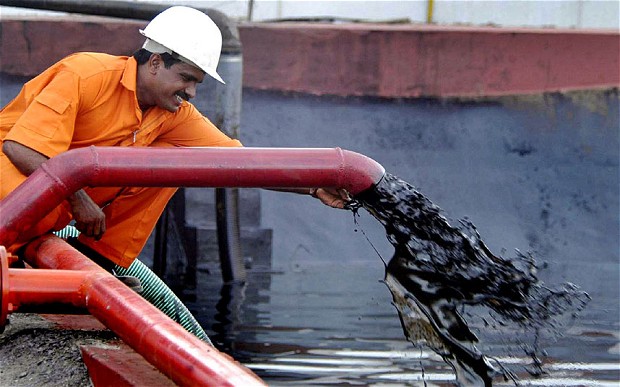
“Libya’s oil output has crashed to a near standstill over the past year as warlords and strikes paralyse the country, tightening the screws on global crude supply as the crisis in Syria comes to a head. There are still pockets of rising oil output, notably in the US where shale oil is rapidly reducing US dependence on energy imports. The geo-strategic effect of shale is double-edged for the US: it lowers the incentive for Washington to commit forces to the Middle East, but it also means the US is better able to handle the consequences of any oil spike. The biggest losers would be those emerging economies such as India and China that rely on fuel imports and operate inefficient industries.”

Did you like this?
Tip Freedomwat.ch Staff with Bitcoin
Tip Freedomwat.ch Staff with Bitcoin
Related posts:
John Kerry calls Beijing 'provocative' in South China Sea disputes
Canada using massive US anti-terrorist database at borders
Ron Paul Speaks His Mind On The Fed, Fiscal Cliff, And Romney
Greenspan Sees Turmoil as QE Boost to Markets Unwinds
Switzerland signs OECD tax convention to end banking secrecy
No possession of drugs required for Malta drug possession charges
Long Beach police caught on camera beating suspect with baton
Feds Searching Record Number of Our Personal Devices at the Border
World Jewish Congress: World Must Outlaw ‘Holocaust Denial’ And Ban Neo-Nazi Parties
Record-High 42% of Americans Identify as Independents
Ray Bradbury was investigated by FBI for ‘communist sympathies’
Germany drops fracking law until after September's election
3D Printer Can Now Turn Molten Gold To Jewelry
Five big tech stories to watch for in 2013
U.S. says it did not sanction holding Glenn Greenwald’s partner at Heathrow