
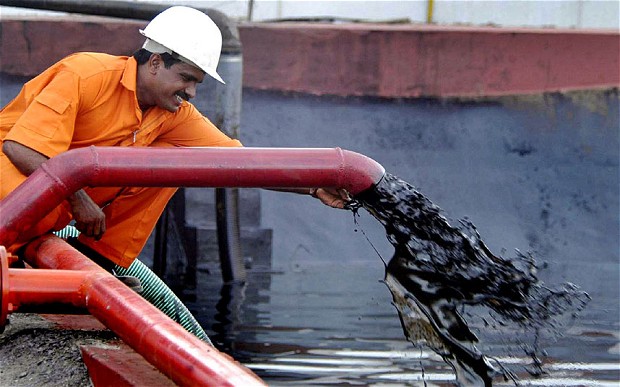
“Libya’s oil output has crashed to a near standstill over the past year as warlords and strikes paralyse the country, tightening the screws on global crude supply as the crisis in Syria comes to a head. There are still pockets of rising oil output, notably in the US where shale oil is rapidly reducing US dependence on energy imports. The geo-strategic effect of shale is double-edged for the US: it lowers the incentive for Washington to commit forces to the Middle East, but it also means the US is better able to handle the consequences of any oil spike. The biggest losers would be those emerging economies such as India and China that rely on fuel imports and operate inefficient industries.”

Did you like this?
Tip Freedomwat.ch Staff with Bitcoin
Tip Freedomwat.ch Staff with Bitcoin
Related posts:
Bitcoin Boom Spreads to IPhones With Mobile-Payment Apps
Officer fired after trying to give phony insurance ticket to politician
US plan calls for more scanning of private Web traffic, email
The Curious Case Of The Bulgarian Bank Runs
‘Yak insurance’ plan saving Nepal’s endangered snow leopard
The condemned coca leaf: One standard for a major soft drink, another for people
Highway bill revives the Export-Import Bank after only five months
Iceland Seen Threatened by Capital Flight From Its Own Citizens
U.S. gives ‘full backing’ to Israel while urging de-escalation of Gaza violence
Judge Napolitano: Is This Constitutional? The California Nanny State Laid Bare.
Dorner manhunt: LAPD officers opened fire on mother, daughter
Regulator Says British Bank Helped Iran Hide Deals
Poll: A Record Number of Americans Say Government ‘Should Do More’
Reminder: A New Light Bulb Ban Kicks in on January 1
The Soviet Colonel Who Averted Nuclear War