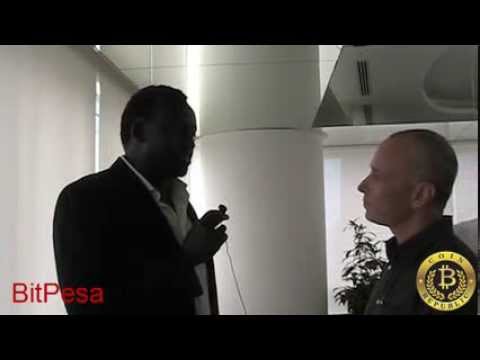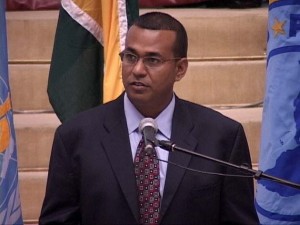
“Nhial Majok explains how his service BitPesa will make remittance in Africa cheaper, easier and faster using Bitcoin.”

“Nhial Majok explains how his service BitPesa will make remittance in Africa cheaper, easier and faster using Bitcoin.”

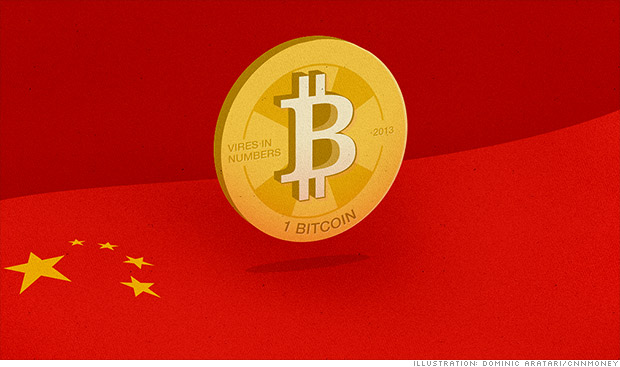
“Bitcoin presents a marvelous gift for China, a country anxious to exert financial influence on a global scale, but nervous to overtly undercut the U.S. dollar, which it holds in abundance. It could also help China exert more economic influence over commodity-rich Africa. Digital currencies like Bitcoin are already set to take off there and ring financial inclusion to 2.5 billion of the world’s most under-banked. In Africa, this could mean the destruction of weak country currencies, large scale consumer adoption via mobile payments, and Chinese financial supremacy in Africa. For America, oil contracts from non-OPEC countries denominated in Bitcoin would pose significant threats.”
http://money.cnn.com/2013/11/18/investing/bitcoin-china/index.html
“Angola has approved laws to regulate stock and debt markets that it plans to open, the head of the Capital Markets Commission said on Thursday, signalling that the country is moving to finally launch the markets after years of delays. A Luanda bourse, a potential entry point for foreigners, has been in the pipeline for more than a decade, but delays – most due to a lack of transparency – have frustrated investors looking to tap into one of Africa’s fastest-growing, but most impenetrable economies. The commission plans to open a secondary debt market next year to help pave the way for a stock market in 2016 for which Angola has already identified several eligible private companies.”
http://www.reuters.com/article/2013/10/17/angola-markets-idUSL6N0I742020131017

“Following in the footsteps of major U.S. companies such as Coca-Cola, Wal-Mart and Yum! Brands, Ford just announced the creation of a fifth geographic division – focused on the company’s growing automotive business in 47 markets across Africa and the Middle East. There, Ford will launch at least 17 new car models over the next two years. The automaker’s push into Africa underscores what I’ve been writing about for two years now, and it highlights exactly why I recommended the Market Vectors Africa Index ETF (NYSE: AFK) over the summer – and why I am re-recommending it now.”
http://thesovereigninvestor.com/2013/11/12/next-great-investment-wave-happening/
“Sudan’s economy has been in turmoil since South Sudan’s secession in 2011 took away of three-quarters of oil production. Oil was the driver of the economy and source for dollars needed for food and other essential imports. The central bank has been trying to bridge a ballooning gap with the black market rate where one dollar costs 7.8 pounds as import firms struggle to get their hand on hard currency. The black market rate has become the benchmark for banks and firms. The secretive central bank tends not to announce devaluations, which are embarrassing for the government, which denies there is a shortage of hard currency.”
http://finance.yahoo.com/news/sudan-devalues-currency-30-percent-150224884.html

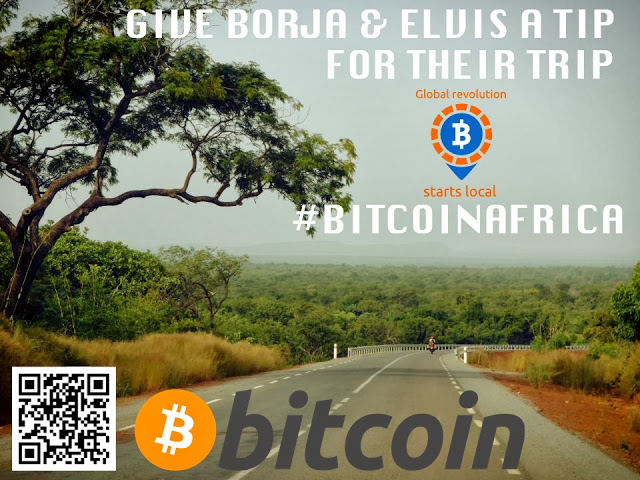
“It was a good opportunity to explain about BitCoin and they were amazed and some of them even wrote down the website of localbitcoins. Pucture fixed and we headed to Lomé and found a place at the beach. We stayed a few days to service the bikes and some administration. We also visit the Fetish Market, only white magic is what they say and visited the waterfalls in Kpalimé, all very nice experience. During our stay, we luckily found a person interested in buying bitcoins and it was a pleasant transaction, just a few delays due the Internet, (we had dinner while the trade was done) in Africa you need to be very patient. So this is it, we just arrived in Cotonou and more stories will follow.”
http://localbitcoins.blogspot.fi/2013/11/bitcoin-revolution-spreads-to-togo.html

“The phasing out and eventual banning of mercury, which is expected to take effect in 2022, will not have a severe impact on small miners and their operations. This is according to Natural Resources and Environment Minister Robert Persaud. Prior to the signing, local small miners had been nervous about plans to ban the dangerous chemical, stating that there is no immediate and cheaper way to recover gold for its ore. However, he posited that the government did not see the ban having any impact on the mining sector, highlighting that it can only lead to positive benefits for the economy. This approach has been supported by the Guyana Gold and Diamond Miners’ Association.”

“South Africa-based bitcoin software firm Switchless has purchased the largest bitcoin exchange on the continent for an undisclosed sum. Switchless, which is based in Stellenbosch, snapped up BitX less than a year after the exchange was founded. According to Switchless director Marcus Swanepoel, his company bought the exchange, which is also based in Stellenbosch, for its team in what he described as an “equi-hire” deal. BitX’s team consists of three people, one of whom is former Google engineer Timothy Stranex, who co-founded the firm in February. The team brings Switchless’s total staff to eight.”
http://www.coindesk.com/software-firm-buys-africas-largest-bitcoin-exchange/

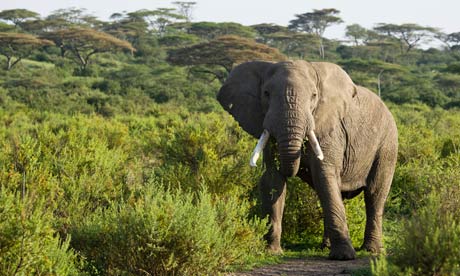
“A government minister in Tanzania has called for a ‘shoot-to-kill’ policy against poachers in a radical measure to curb the mass slaughter of elephants. Khamis Kagasheki’s proposal for perpetrators of the illicit ivory trade to be executed ‘on the spot’ divided opinion, with some conservationists backing it as a necessary deterrent but others warning that it would lead to an escalation of violence. Tanzania is said to have lost half its elephants in the past three years. Ivory has been dubbed the ‘white gold of jihad’ by activists who say it is funding armed rebel groups including al-Shabaab, the militia behind the siege of the Westgate shopping mall in Nairobi that left at least 67 people dead.”
http://www.theguardian.com/environment/2013/oct/08/shoot-elephant-poachers-tanzania-ivory

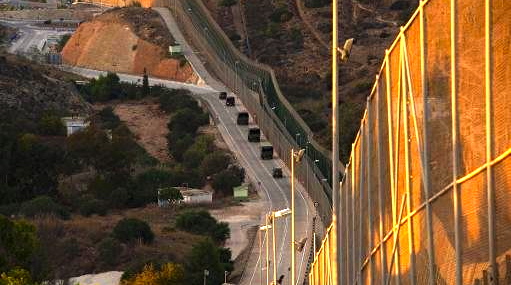
“Growing numbers of Africans are taking a daunting test to enter to Europe: leaping a towering, triple-layer security fence and trying to race across before rapid-deployment police guards can catch them. A vast security operation has failed to deter the would-be migrants attempting to reach the Spanish territories of Ceuta and Melilla, cities that lie on the northern coast of Morocco and offer the only land border between Africa and Europe. Surveillance cameras watch over the three layers of fencing, which is lit up along its entire length to help spot migrants. On the other side stands Mount Gurugu where hundreds of African migrants lie in wait for the right moment to make a dash for European soil.”