http://www.economicpolicyjournal.com/2013/09/this-is-what-happens-when-you-have-so.html

Did you like this?
Tip Freedomwat.ch Staff with Bitcoin
Tip Freedomwat.ch Staff with Bitcoin

http://www.economicpolicyjournal.com/2013/09/this-is-what-happens-when-you-have-so.html

“We don’t just have an economic bankruptcy, but we also have a moral and ethical bankruptcy taking place on top of the threat of war, and the fact that most governments are taking away freedoms and personal initiatives by making them people dependent on state handouts. We also have the very dangerous situation where the rich are getting richer and the poor are getting poorer. Since 2009, the wealthiest 7% have seen their wealth increase by 28%, while the other 93% have seen their wealth decline by 4%. If you take the wealthiest 300 in the world, they have more wealth than the poorest 3 billion. This is very dangerous for a world which that will have more and more people going hungry.”
http://dailyreckoning.com/danger-exploding-wealth-gap/
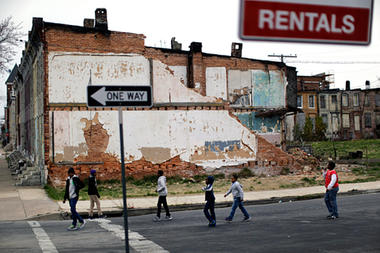
“The share of those who identify themselves as ‘lower class’ – at 8.4 percent – now stands at its highest level in four decades, according to separate data released this week from the long-running General Social Survey (GSS). Just as surprising, the share of college graduates who describe themselves as lower class has jumped from 2.6 percent in 2002 to 5.8 percent in 2012. According to the GSS, only 55 percent of Americans these days believe things will get better for themselves and their kids – a rather paltry number for a country built on the notion that everyone has an equal chance to get ahead.”
“Many fracture critical bridges were erected in the 1950s to 1970s during construction of the interstate highway system because they were relatively cheap and easy to build. Now they have exceeded their designed life expectancy but are still carrying traffic — often more cars and trucks than they were originally expected to handle. The Interstate 5 bridge in Washington state that collapsed in May was fracture critical. Cities and states would like to replace the aging and vulnerable bridges, but few have the money; nationally, it is a multi-billion-dollar problem. As a result, highway engineers are juggling repairs and retrofits in an effort to stay ahead of the deterioration.”
http://teapartyeconomist.com/2013/09/16/government-run-bridges-guaranteed-erosion/

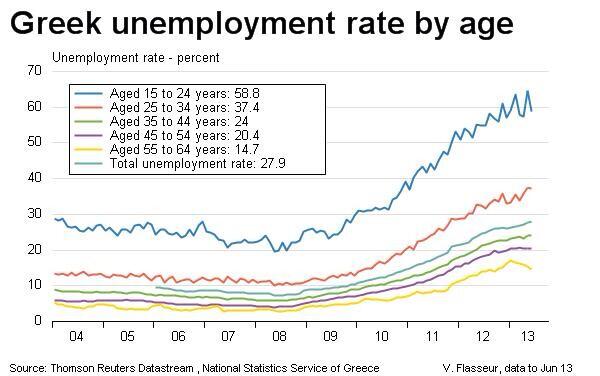
“The political class may have set the rules, but almost everyone adhered to them. Now the game is over, and there is no money left for fakelaki and rousfeti, corruption and nepotism, two basic principles of Greek political life until now. Suddenly there is room for those who want to set up new rules, and who want change and more cooperation. Some 3,000 initiatives were established throughout Greece in the last three years. They all have the same goal: to do things better than before. There are food cooperatives, community gardens, social pharmacies and neighborhood assistance programs for the poor. In Crete alone, there are now five alternative currencies.”
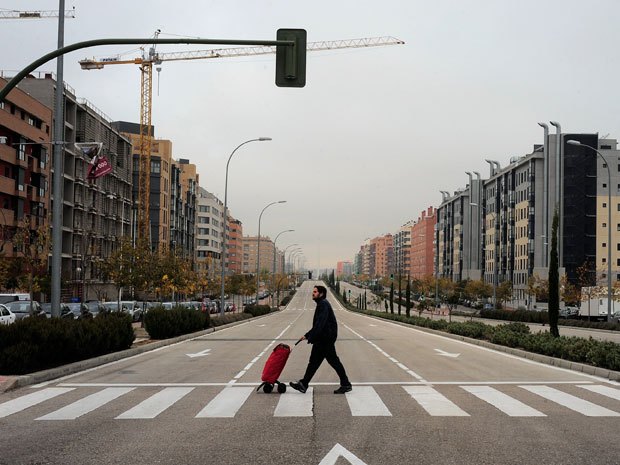
“If the organization known as Okupatutambien, or ‘Become a Squatter Too’ has its way, the country will see a mass expropriation of abandoned or repossessed property to resolve the housing crisis. According to a 117-page “Squatters’ Guide” published on the Internet by the group, there are 3 million empty homes in Spain, or about 100 for each of the 30,000 homeless. The guide advises would-be squatters on how to stake out, enter and remain inside properties, leaving the rightful owner and authorities powerless to evict them. It also offers free counseling from an office in downtown Madrid on how to siphon water and electricity from municipal supplies and how to deal with law-enforcement officers.”
http://business.financialpost.com/2013/04/17/a-tide-of-squatters/

“A ‘squeezed generation’ of middle-aged Europeans are convinced they are going to be poorer in retirement than their parents, according to a global survey that found the Chinese the most confident about their future and the French, Germans and Spanish the most pessimistic. Americans are the most sure they will enjoy their retirement, the British are among the most likely to worry about being lonely, while individuals in Eastern European countries are uniformly morose about their future. In the survey, 43% of Japanese said they associate retirement with ‘insecurity’ compared to just 13% in China and the US, and 15% in the UK.”
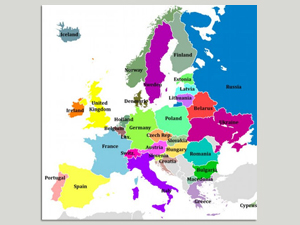
“Reading the financial press, one gets the impression there are only two sides to the austerity debate: pro-austerity and anti-austerity. In reality, we have three forms of austerity. There is the Keynesian-Krugman-Robert Reich form which promotes more government spending and higher taxes. There is the Angela Merkel form of less government spending and higher taxes, and there is the Austrian form of less spending and lower taxes. Of the three forms of austerity, only the third increases the size of the private sector relative to the public sector, frees up resources for private investment, and has actual evidence of success in boosting growth.”
http://mises.org/daily/6523/The-Three-Types-of-Austerity
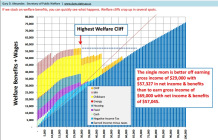
“It’s hardly radical libertarianism to reduce unemployment benefits from four years to two years, but it is rather significant when even politicians realize that it’s not good – as illustrated by these powerful cartoons – to lure people into the wagon when nations need more people pulling the wagon. It’s a bit depressing that Denmark actually ranks higher than the United States in the most recent Economic Freedom of the World rankings. Yes, their welfare state is too big, their tax system is a nightmare, and they are saddled with one of the world’s most expensive bureaucracies, but Denmark has ultra-free market policies in other areas.”
“Michigan’s Buena Vista — ‘Good View’ — school district in Michigan shut down this week. It is out of money. Some teachers say they will teach for free. But will all of them do this? In any case, it’s illegal. Michigan doesn’t allow it. The state cut funding by $3 million, due to declining enrollment. The nearby Pontiac School District is close to bankrupt. It can’t meet payroll. Two districts in Arkansas are bust. The Philadelphia district in Pennsylvania is begging for money from the state. We are in an economic recovery. What happens in the next recession?”
http://teapartyeconomist.com/2013/05/16/entire-school-district-shuts-down-out-of-money/