“Did you know about 70% of Greeks own their own home? Hear more on how this financially distraught country is made up of some of the best savers in the world. Alex of the NYC Bitcoin Center at Freedom Fest 2015.”
Tag Archives: Economics
Mises on the Robotics Revolution
“We customers are the source of the constant innovation in robotics. We keep asking suppliers to sell us what we want to buy cheaper. If those who sell to us do not comply with our demand, and some of their competitors do, then they will find themselves out of work. We should not blame the robots. We should not blame the stars. We should not blame greedy capitalists. We should blame ourselves. We are the greedy people who want cheaper goods, better goods, and goods delivered more rapidly. Those companies that are switching to robots are not doing this out of their fear of robotics. They are doing this out of this fear: fear of their customers.”
Autonomous Mowing: The Death of Lawn Maintenance Employment

“Expect golf course mowing positions to vanish within a few years. Many yard work service positions will vanish as well. Zero-degree mowers are in widespread use. It will not take much to equip them with self-mowing capability. So instead of a homeowner farming out mowing (or mowing himself), envision a system where the homeowner maps the perimeters of the lawn and the perimeters of any flower beds that need to be avoided, and the mower does the rest. Rather than pay someone to mow the lawn twice a week, a fully autonomous mower would pay for itself in a year or two most likely. And the higher the minimum wage, the faster the payback of purchasing such equipment.”
http://globaleconomicanalysis.blogspot.com/2015/04/autonomous-golf-greens-and-death-of.html
The One Lesson to Learn Before a Market Crash

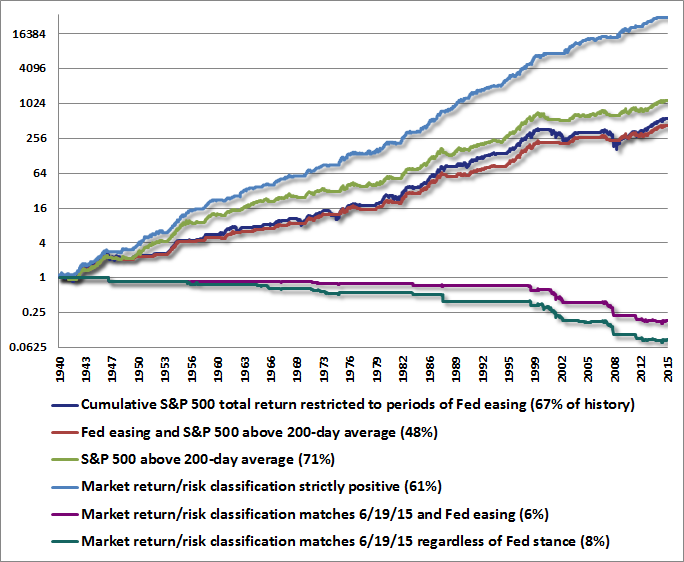
“The media incorrectly suggests that the collapse of the market in 2008 began with the Lehman bankruptcy on September 15. The fact is that the market fully recovered to even higher levels the following week as the government banned short selling of financial stocks (much like China is doing more broadly at present). Weeks later, in a wicked case of ‘sell the news,’ the actual collapse started literally 15 seconds after the TARP bailout was passed by Congress. Investors want to tie market outcomes to very specific events or catalysts. But history suggests a different lesson: once extreme valuations are joined by a shift toward risk-aversion among investors, the specific events become irrelevant.”
Loads of Debt: A Global Ailment With Few Cures

“As central banks like the Federal Reserve and the European Central Bank have printed trillions of dollars and euros, markets in stocks and bonds, as well as other types of assets, have responded optimistically, sometimes reaching highs that were unthinkable seven years ago in the depths of the financial crisis. Central banks can make debt less expensive by pushing down interest rates. Crucially, though, they cannot slash debt levels to bring much quicker relief to borrowers. In fact, lower interest rates can persuade some borrowers to take on more debt. Many countries are now in a position where their governments and companies live in fear of an increase in interest rates.”
John Hussman: Durable Returns, Transient Returns

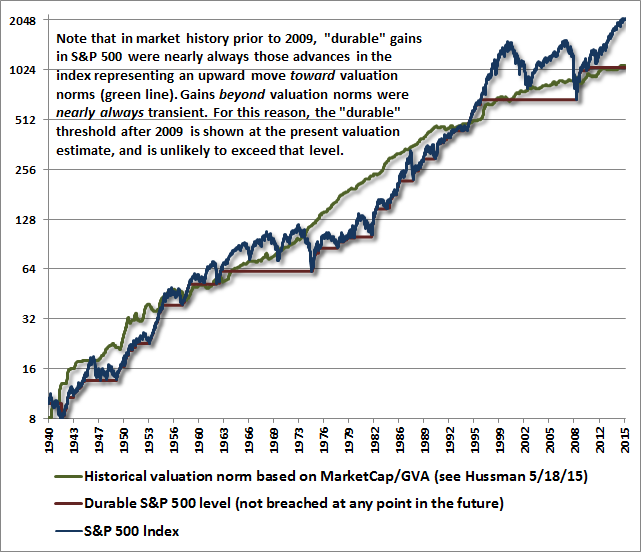
“Once extreme valuations have been established, further market gains have always been transient. Once market internals deteriorate, it’s a signal that investors have shifted from risk-seeking to risk-aversion. At that point, there is no specific event that must be known in advance. One need only have an appreciation for the inevitable swing of the pendulum from extreme euphoria to extreme fear that has characterized the financial markets for centuries. The ‘catalyst’ is rarely appreciated as a catalyst until after severe market losses have already occurred, and in many cases, that catalyst is simply an event that concentrated selling plans that were already being contemplated. It’s always something.”
John Hussman: All Their Eggs in Janet’s Basket

“Investors whose strategy is to follow the Fed – in the belief that stocks will advance as long as the Fed does not raise interest rates – are free to place all their eggs in Janet’s basket. On the other hand, for investors whose strategy is historically informed by factors that have reliably distinguished market advances from collapses over a century of history, our suggestion is to consider a stronger defense. Our greatest successes have been when our investment outlook was aligned with valuations and market internals, and our greatest disappointments have been when it was not. Both factors are unfavorable at present, and our outlook is aligned accordingly.”
Jacob Hornberger: Wrong Message in the Ulbricht Case
“Forrest’s draconian sentence isn’t even serving to dissuade Silk Road-type competitors from continuing the same type of operation that Ulbricht was operating. Heck, Ulbricht’s competitors and new potential competitors might well be ecstatic that Forrest has removed Ulbricht as a competitor. What all too many federal officials, including federal judges, have is a notable lack of understanding about economic principles. Maybe that’s because economics is not taught in law school. If they had such an understanding, they would understand that the more they crack down in the drug war, the worse the problem becomes.”
Silk Road Founder Ross Ulbricht Sentenced to Life (and Death) in Prison

“When you couple the eBay-style reputation engine with the relative anonymity of a black market, you get what we might call a ‘gray market.’ And that gray market allowed those determined to buy certain items — illegal drugs, etc. — to do so in a far, far safer way than ever before. Silk Road and dark websites like it remove commercial activity from the hands of violent cartels fighting over territory, from the gangland districts of US cities, and from dodgy dealings behind shady buildings. Second, in a pragmatic sense, the apprehension and sentencing of Ulbricht has not deterred these grey market entrepreneurs.”
http://fee.org/anythingpeaceful/detail/ross-ulbricht-fool-martyr-or-trailblazer
HSBC economist: “There aren’t enough lifeboats to go around”

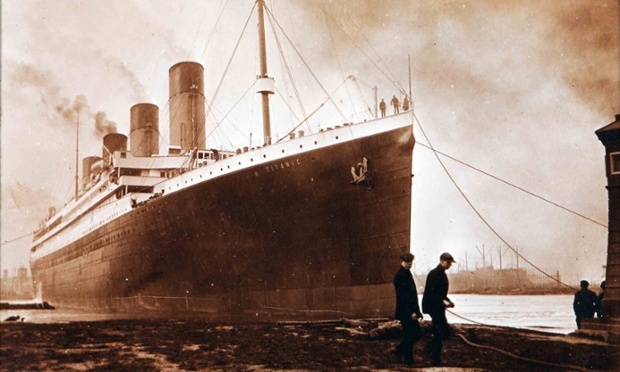
“HSBC economist Stephen King yesterday published a weighty analysis titled ‘the world economy’s titanic problem’ that pointed out that it has been six years since the trough of the last US recession. ‘If history is any guide, we are probably now closer to the next one,’ he said. Business cycles always turn, and after six years of growth, even at a pedestrian rate, the current recovery is old. King’s point – which explains the Titanic reference – is that policymakers are out of lifeboats if a recession were to arrive. The US Fed has dealt with past recessions by cutting interest rates by at least five percentage points. That is obviously impossible today because rates are still on the floor.”