Currency war: Who will be the casualties?

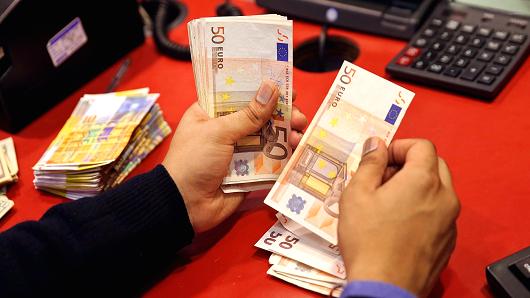
“Central banks are in combat mode.  On the front lines: Europe, Denmark, Canada, Switzerland, Peru and India. Each of their central banks has taken unprecedented and dramatic action to ease policy and weaken their currencies in the past few days.  The currency wars have defined post-financial crisis policies, as countries and central banks search for economic growth that’s been lumpy and disappointing.  The question investors are now asking: How does this all play out? For the time being, they love it. Easier policy, low rates, QE, cheap money, weak currencies—it’s all a recipe for gains in stocks and bonds.”

http://www.cnbc.com/id/102360917

Scan to Donate Bitcoin to Freedomwat.ch Staff
Did you like this?
Tip Freedomwat.ch Staff with Bitcoin

Bill Bonner: A Crash Course in Money (Part III)

Bill-Bonner2

“Economists gain jobs, fame and prestige by claiming to improve the workings of free markets. We see that their theories have clearly worked for them. They have improved their own position… and shifted trillions of dollars to their cronies in the financial industry.  But is there a clear, undisputed example in which they have worked for anyone else?  Again, none that we know of.  But there are plenty of examples of economies that have been severely damaged by overly ambitious central planners.”

http://bonnerandpartners.com/crash-course-money-part-iii/

Scan to Donate Bitcoin to Freedomwat.ch Staff
Did you like this?
Tip Freedomwat.ch Staff with Bitcoin
Swiss Gold Referendum: What It Really Means

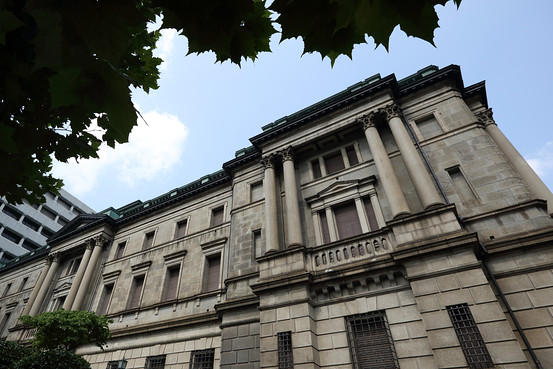
“In a few days the Swiss people will go to the polls to decide whether the Swiss central bank is to be required to hold 20% of its reserves in the form of gold. Polls show that the gold requirement is favored by the less well off and opposed by wealthy Swiss invested in stocks.  These poll results provide new insight into the real reason for Quantitative Easing by the Federal Reserve and European Central Bank.  The view in Switzerland is that a gold backed Swiss franc would be more valuable, and a more valuable franc would increase the purchasing power of wage earners, thus reducing their living costs.  The vote is clearly a vote about income shares between the rich and the poor.”

http://www.thedailybell.com/editorials/35855/Paul-Craig-Roberts-Swiss-Gold-Referendum-What-It-Really-Means/

Scan to Donate Bitcoin to Freedomwat.ch Staff
Did you like this?
Tip Freedomwat.ch Staff with Bitcoin
How the US sent $12bn in cash to Iraq. And watched it vanish [2007]

“The US flew nearly $12bn in shrink-wrapped $100 bills into Iraq, then distributed the cash with no proper control over who was receiving it and how it was being spent.  The staggering scale of the biggest transfer of cash in the history of the Federal Reserve has been graphically laid bare by a US congressional committee.  In the year after the invasion of Iraq in 2003 nearly 281 million notes, weighing 363 tonnes, were sent from New York to Baghdad for disbursement to Iraqi ministries and US contractors. Using C-130 planes, the deliveries took place once or twice a month with the biggest of $2,401,600,000 on June 22 2004, six days before the handover.”

http://www.theguardian.com/world/2007/feb/08/usa.iraq1

Scan to Donate Bitcoin to Freedomwat.ch Staff
Did you like this?
Tip Freedomwat.ch Staff with Bitcoin
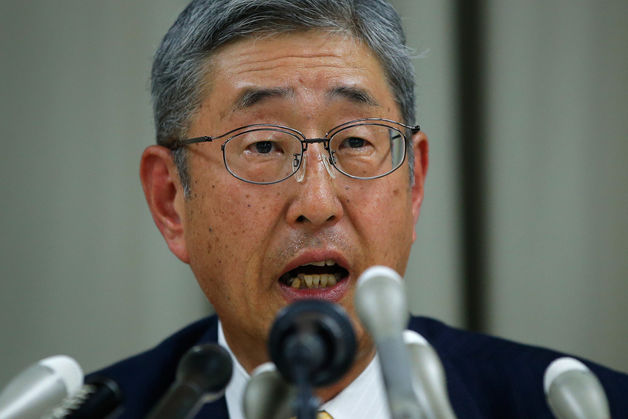
Bank of Japan Sails Further Into Uncharted Territory With ‘QQE’

“Bank of Japan Gov. Haruhiko Kuroda’s plan — branded ‘quantitative and qualitative monetary easing,’ or QQE, is radical not just for the quantity, but also for the ‘quality’ of the assets it’s soaking up in a bold campaign to end deflation. The BOJ, like the world’s other major central banks, buys assets from private holders as the primary mechanism for injecting money into the economy, because the traditional lever — cutting interest rates — has been neutered by the fact that rates are at or near zero in most advanced economies. But some — including Mr. Kuroda’s cautious predecessor, Masaaki Shirakawa, who avoided the purchase of longer-term debt — feel that’s a dangerous path.”

http://blogs.wsj.com/economics/2014/10/31/bank-of-japan-sails-further-into-uncharted-territory/

Scan to Donate Bitcoin to Freedomwat.ch Staff
Did you like this?
Tip Freedomwat.ch Staff with Bitcoin
Greenspan Sees Turmoil as QE Boost to Markets Unwinds

“Former Federal Reserve Chairman Alan Greenspan said he doesn’t think the Fed can unwind years of extraordinary stimulus without causing turmoil in financial markets. ‘I don’t think it’s possible,’ Greenspan said during an event today at the Council on Foreign Relations in New York, responding to a question about the likely market impact of the Fed’s exit.  The program ‘hasn’t been a success on the demand side for one fundamental reason,’ Greenspan said. ‘What you’re basically seeing is an explosion of assets, an explosion of reserve balances, and that’s the only two statistics that are moving.'”

http://www.bloomberg.com/news/2014-10-29/greenspan-sees-turmoil-as-qe-boost-to-markets-unwinds.html

Scan to Donate Bitcoin to Freedomwat.ch Staff
Did you like this?
Tip Freedomwat.ch Staff with Bitcoin
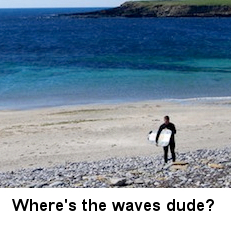
What Happens When the Surf Is Down: Contemplating Stocks without QE

“Since the financial crisis of 2008 stock prices have only risen when the Fed is either expanding its balance sheet, hinting that it will soon do so, or actively recycling assets to hold down long term interest rates. Absent any of these aggressive moves, stocks have shown a clear tendency to fall. Curiously, while most investors now believe that QE is in the past, and that the Fed will not even be hinting at a restart, few would argue that the current bull market is in danger. But a quick look at how much influence the Fed’s operations have had on market performance should send a chill down Wall Street.”

http://www.europac.net/research_analysis/newsletters/global_investor_newsletter_fall_2014

Scan to Donate Bitcoin to Freedomwat.ch Staff
Did you like this?
Tip Freedomwat.ch Staff with Bitcoin
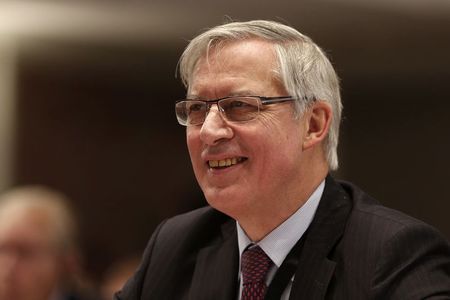
ECB’s Noyer: ‘no problem’ buying government bonds if needed

“European Central Bank Governing Council member Christian Noyer, who previously said that only ‘extreme circumstances’ warranted such purchases, added that the ECB could also consider intervening on the corporate bond market if conditions did not require purchases of government debt.  ECB President Mario Draghi has announced the unanimous determination of the bank’s policy-setting council to take further unconventional measures if necessary to combat falling inflation.  Noyer said that he did not consider deflation a ‘credible risk’.  ‘The risk is mainly from inflation that is too low, for too long,’ he said.”

https://au.news.yahoo.com/world/a/25513118/ecbs-noyer-no-problem-buying-government-bonds-if-needed/

Scan to Donate Bitcoin to Freedomwat.ch Staff
Did you like this?
Tip Freedomwat.ch Staff with Bitcoin

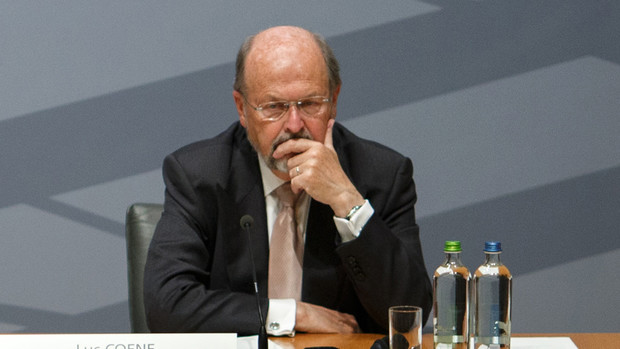
ECB Said to Expand Covered Bond Purchases From Spain to Germany

“The European Central Bank bought Spanish covered bonds in a third day of asset purchases that has seen it acquire notes from Italy to Germany, according to people familiar with the matter.  The ECB is adding to French and Portuguese securities it bought this week, said the people, who asked not to be identified because they’re not authorized to talk about it. The central bank has been buying bonds in parcels from 5 million euros ($6.3 million) to 20 million euros. German politicians warned against buying government bonds on a large scale, also known as quantitative easing, and Bundesbank President Jens Weidmann said such a move comes with risks.”

http://www.bloomberg.com/news/2014-10-22/coene-tells-l-echo-ecb-has-no-proposal-on-corporate-bonds.html

Scan to Donate Bitcoin to Freedomwat.ch Staff
Did you like this?
Tip Freedomwat.ch Staff with Bitcoin

Japan’s Pension Fund Cutting Local Bonds to Buy Equities

Japan’s public retirement-savings manager will put half its holdings in local and foreign stocks and start investing in alternative assets as the world’s biggest pension fund seeks higher returns.  The 127.3 trillion yen ($1.1 trillion) Government Pension Investment Fund set allocation targets of 25 percent each for Japanese and overseas equities, up from 12 percent each, it said at a briefing today in Tokyo. GPIF will reduce domestic bonds to 35 percent of assets from 60 percent.  The new allocations were released hours after the Bank of Japan unexpectedly added to monetary easing, sending the Nikkei 225 Stock Average to a seven-year high.”

http://www.bloomberg.com/news/2014-10-31/japan-s-pension-fund-cutting-local-bonds-to-buy-equities.html

Scan to Donate Bitcoin to Freedomwat.ch Staff
Did you like this?
Tip Freedomwat.ch Staff with Bitcoin