“The problem our nation faces is a serious one. We have now paired a massive speculative bubble with an errant pin that has every prospect of creating disruption. A steep financial retreat was already baked in the cake prior to the election. My concern is that having reached this precipice, there are few policies that have the capacity to make the consequences substantially better, but many that could make the outcomes substantially worse.”
Tag Archives: Economics
Australia Joins The War On Cash While Venezuela Backtracks Cash Ban

The Venezuelan government, amid looting, protests, shootings, and extremely long lines at banks, decided that its ban on the most circulated 100-bolivar note was ill-advised at this time.
The Indian government caused its own outbreak of chaos and deaths by banning 500- and 1000-rupee bank notes, worth about $7 and $14 respectively. Amid the ensuing long lines and protests, in at least 6 cases bank employees were arrested aiding their customers in the conversion of banned notes. Indians have been employing a number of workarounds to get their cash converted to the new notes, but others have been simply buying gold from vendors. The government’s response is to now push for the income-tax office’s raids on families to target not only cash holdings, but gold as well.
An article in The Economist enumerates the failures of the India demonetization initiative:
- 98% of economic transactions in India are done in cash
- Four-fifths of India’s workers are paid in cash
- Estimates of annual GDP growth now include a 2% decline due to payments drag
- The new notes are smaller and only a subset of ATMs can handle them
- $22 billion in notes are to be replaced; only $3 billion worth can be printed per month
- The flood of deposits into banks were used to buy bonds, depressing interest rates
The cash ban has also caused a diplomatic row, as a flight to the safety of US dollar notes and the ensuing shortage of dollars has left Pakistan unable to pay its diplomatic staff in India.
Turning a blind eye to the chaos in other countries that are banning their own citizens’ cash, the head of the Australian tax office suggested banning the Australian $100 note in an explicitly stated attempt to raise tax revenue. Earlier in the year, a surprise $34 billion increase in the Australian budget deficit over four years had been acknowledged.
Developed-world governments are joining their developing-world counterparts in governing by surprise and openly placing their citizens’ wealth at risk through anti-cash messaging and actions.
The stated reasons usually range from fighting the drug black market (created by global drug prohibition) to fighting terrorists (often created, funded, and armed by developed-world governments) to fighting tax avoidance, which could be fought more effectively by lowering tax rates and eliminating burdensome paperwork and reporting requirements.
However, regardless of the stated reasons, the underlying motivation is to move cash-based activity into banks. This benefits the global ruling class in several ways.
After all, depositors at a bank are no longer the bank’s true customers, thanks to privileged credit facilities at the central bank, state-sponsored deposit and loan guarantees, and myriad banking regulations erecting barriers to entry and thereby fostering consolidation of bank ownership. Banks can survive without customers’ deposits, thanks to state backing, but they cannot survive without regulatory compliance. In the cashless society, the banks will have an army of new unwilling customers from whom to extract fees, without being subject to the otherwise countervailing market force of consumer choice.
And the state wins, because all depositors’ economic activity is transparent to it through its control over the banks, making tax collection more thorough and dragnet surveillance more comprehensive. The state can also, through its control over the banks, order accounts frozen at will. This could prevent, for example, a defendant in a government action from retaining a specialist lawyer that could mount an effective defense, which wouldn’t be a problem if he had cash.
Other than control, the state can directly profit from cash bans: notes that are not turned in can be cancelled and converted into a ‘fiscal stimulus’ windfall for the state, a strategy openly floated during India’s cash ban.
Workers and savers lose; who else loses? As a Telegraph article describes, a cashless society would be a nightmare for the homeless, who generally do not possess the proper paperwork to satisfy the state’s requirements to open a bank account. Suddenly the class warfare inherent in cash bans comes into focus, and not in a way that was expected.
As The Economist states:
India is not the first country to introduce abrupt, drastic reform of its currency. But the precedents—including Burma in 1987, the former Soviet Union in 1991 and North Korea in 2009—are not encouraging. Burma erupted in revolt, the Soviet Union disintegrated and North Koreans went hungry.
Governments that now seek to ban cash in partnership with banks should consider whether they wish to be in the company of the above countries, whether in their motivation or in the outcome.

Junk-Rated Borrowers Reap Rewards in a World of Negative Yields

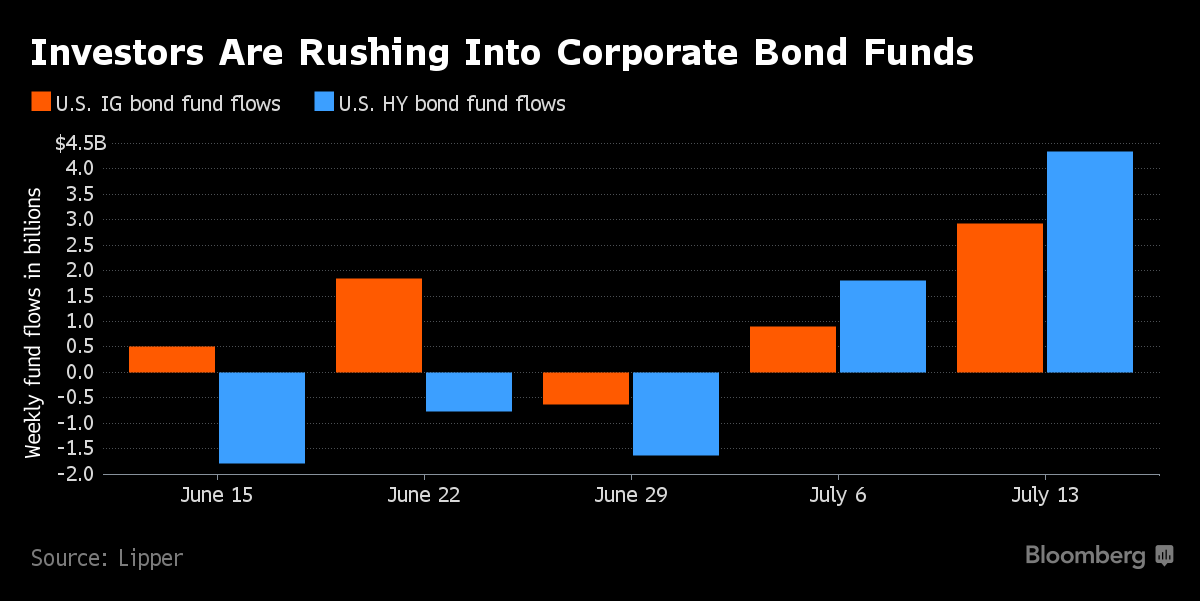
“For investors with $12 trillion of negative-rate bonds worldwide, U.S. junk securities and their 6.9 percent average yield look like a gold mine. But with so many investors streaming into the market, the debt is now yielding almost 3 percentage points less than the average of the past two decades, Bank of America Merrill Lynch index data show. And they’re buying it up at the same time that junk-rated borrowers default at the fastest pace in six years.”
Bernanke Advises “Perpetual Bonds” To Japanese Government

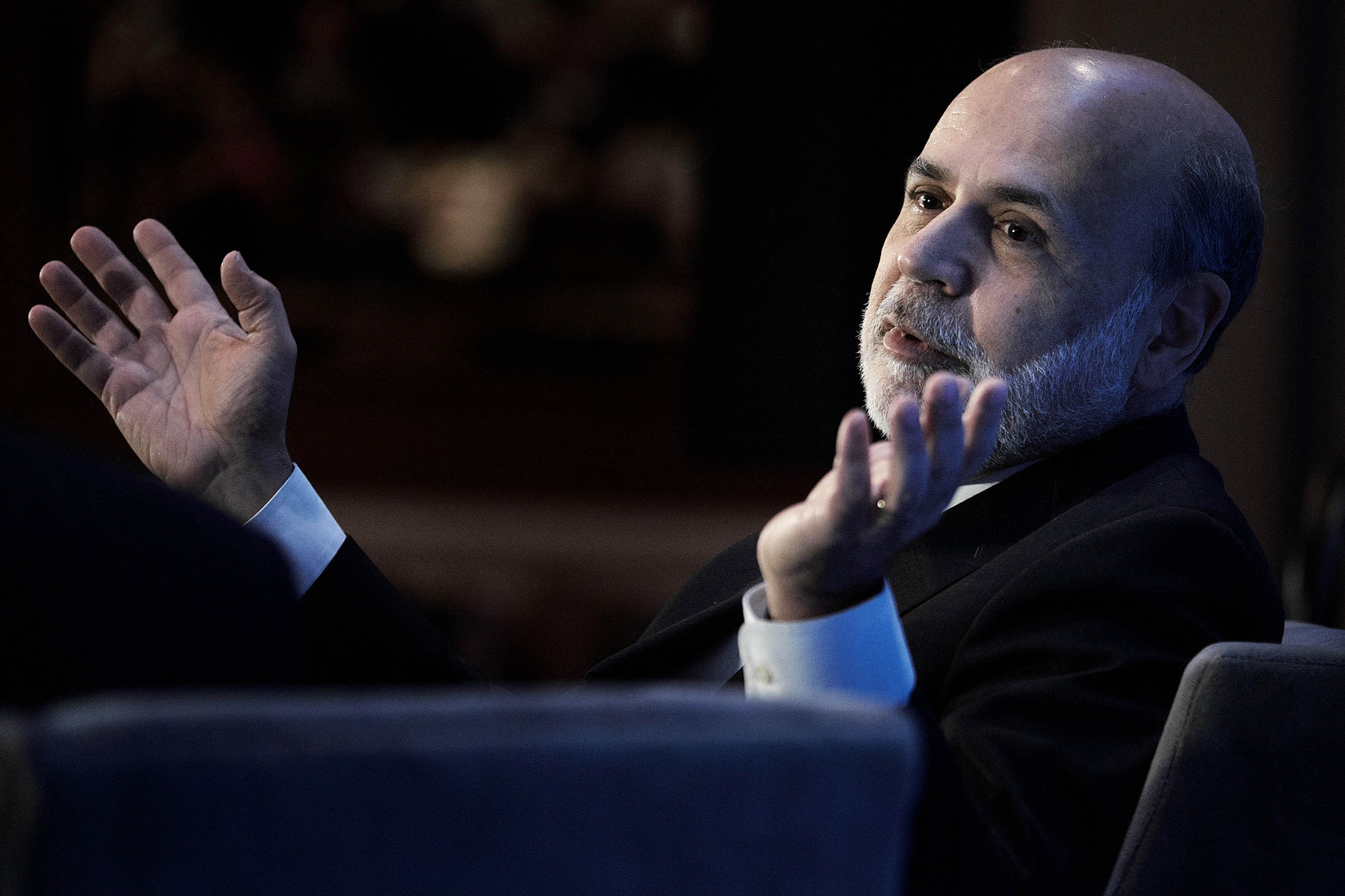
“In April the former Federal Reserve chief warned there was a risk Japan at any time could return to deflation. He noted that helicopter money — in which the government issues non-marketable perpetual bonds with no maturity date and the Bank of Japan directly buys them — could work as the strongest tool to overcome deflation, according to Honda. Bernanke noted it was an option, he said. Bernanke joined central bank chief Haruhiko Kuroda over lunch this Monday and on Tuesday he attended a gathering with Abe and key officials, including Koichi Hamada, another influential economic adviser. The central bank didn’t reveal what Kuroda and Bernanke discussed.”
Negative rates leading to ‘day of reckoning’ fear on Wall Street

“The reason anyone would buy negative-yielding debt is actually pretty simple: Because they have to. They are central bankers looking to help promote economic growth. They are insurance companies, pension funds and money managers who have to match liabilities with assets. They are not, by and large, retail investors who are so afraid of risk that they’re willing to pay for the privilege of lending money to a government. Together, those buyers have helped build a nearly $12 trillion funnel of negative-yielding sovereign debt — unprecedented in world history. But what awaits on the other side is adding to the worries of investing professionals.”
http://www.cnbc.com/2016/07/11/negative-rates-leading-to-day-of-reckoning-fear-on-wall-street.html
Race to the Bottom: Injuring the Real Economy with Paper “Wealth”
“The ECB and the Bank of England have purchased so much government debt that they have recently reached even further down the credit ladder, with the ECB buying corporate bonds, and the Bank of England announcing purchases of ‘Tier C’ assets, which include assets ‘backed by credit cards; student loans; and consumer debt.’ Unfortunately, this isn’t backing at all. When will it end? It will end as credit defaults rise, bank bailouts become necessary, covenant lite debt proves to be, indeed, lite on covenants, and financial assets pushed to zero long-term yields prove, indeed, to yield zero returns over the long-term.”
John Hussman: Over-Adaptation and Market Drawdowns

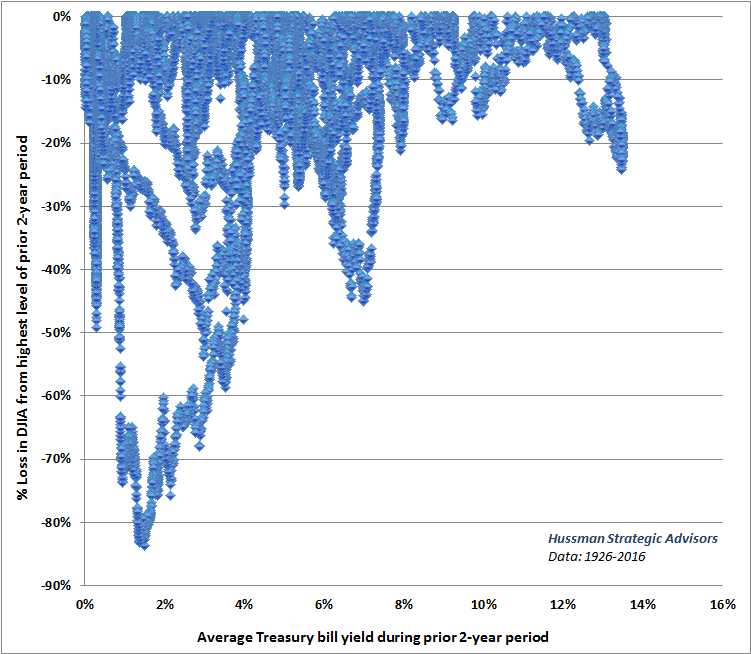
“The worst market losses across history have been associated with relatively low short-term interest rates during the collapse and the absence of any material hike in interest rates at all as the collapse unfolds. Investors have convinced themselves to tolerate historic valuation extremes, confident that stocks can’t fall unless interest rates rise. They’ve walked right into this setup because they don’t recognize it, and neither central bankers nor the investment profession appear interested in admitting the increasingly pressing risks that they themselves have been complicit in creating.”
John Hussman: The Coming Fed-Induced Pension Bust

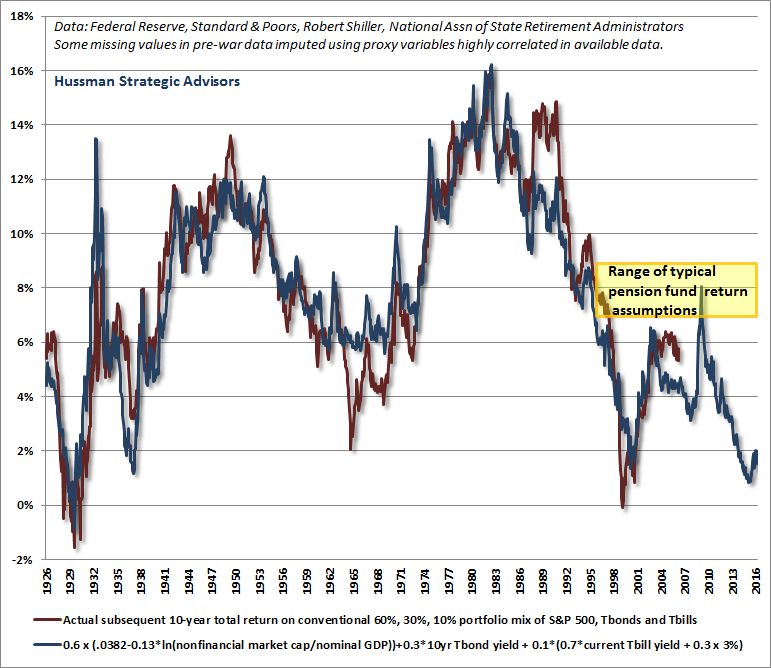
“What’s quite unfortunate, in my view, is that the strong realized past returns of the past 25 years are now actually being taken as a justification of current, unrealistically high pension return assumptions. This, in turn, encourages continued underfunding. This inclination appears to be wholly encouraged by Federal Reserve policies, and threatens to amplify an inevitable pension crisis in the coming years. The realized past returns of this period have been strong precisely because they have robbed from future expected returns. The tide will turn, as it always has in complete market cycles across history, and as investors discovered during the market collapses of 2000-2002 and 2007-2009.”
A century bond? Just think what can happen in 100 years

“Who would you lend money to for 100 years? Your children? Your best friend? Perhaps. But the Irish government? Or the Belgian or French government? They all seem to think they are worth a loan for this kind of duration. Ireland last month launched the first 100-year bond, raising €100m. If you hang around to 2116, you will earn 2.35pc on your cash. Last August, Belgium blazed that trail, with its own century-long debt issue. Mexico has also issued one. The Spanish and the Italians have both gone above 45 years, and will probably join the century club as soon as they think they can get away with it. Even the UK has already dipped its toe in the water.”
John Hussman: Bearishness Is Strictly For Informed Optimists

“When the primary use of fiscal policy is to wipe up the catastrophe of weak productivity, lost income, unemployment, and malinvestment created in the repeated aftermath of collapsed financial bubbles, the endgame is going to be stagnant living standards and a debased currency. Ultimately, QE may finally create inflation by provoking a loss of fiscal control. Central banks have risked just that by encouraging yet another speculative bubble, heavy issuance of low-grade debt, and the diversion of savings toward unproductive investment. The inevitable fiscal consequences are likely to include bailouts, income-replacement and transfer payment programs as the third bubble since 2000 collapses.”