
“Many private businesses in South Africa were interested and willing to employ black workers and invest in their training and acquisition of more highly valued marketable skills. However, the Afrikaner government used its regulatory and fiscal tools of control and intimidation to ‘keep in line’ white employers who saw economic gain by ‘crossing the color line’ in their businesses and enterprises. Thus, it was political goals of the South African government and not the market motive of profit that prevented black South Africans from having the opportunities to rise more out of poverty through peaceful competition and cooperative commercial association.”

Tag Archives: Economics
Global Immigrants Send $500 Billion Back Home

“International migrants are sending more than $500 billion back to family members each year, almost triple the figure since 2000, providing a major economic boost to less-affluent nations, a Pew Research Center study shows. A rising share of migrants live in high-income countries, including the U.S., by far the most common destination, according to the report released yesterday. The U.S. has a fifth of the world’s migrants, up from almost a sixth in 1990. It’s also the largest source of payments, sending $123.3 billion in 2012, the Pew analysis of World Bank data shows. The U.S. and Russia easily remain the top two destinations, while Germany has risen to third from sixth in 1990.”
http://www.bloomberg.com/news/2013-12-17/global-immigrants-send-500-billion-back-home.html
Bill Bonner: The Real Numbers Behind America’s Phony Recovery
“What kind of economy is it that reduces a man’s wages over a 43-year period? We don’t know. But it’s not likely to win any prizes. But why, with so many strikes against it, does the US economy still have the bat in its hands? It’s partly because the Fed has pumped up stock, bond and house prices – not to mention net corporate profit margins and consumer spending . So, the averages look pretty good… and they mask the ugliness beneath them. The bottom 90% of the population – people in 9 houses out of 10 – have 10% less income than they had 10 years ago. This is not a success story. It’s a disaster. And not one that tempts us into an overvalued US stock market.”
http://www.bonnerandpartners.com/the-real-numbers-behind-americas-phony-recovery/
Cognitive Dissonance of Ben Bernanke?
“The aggrandizement of ‘leaders’ who preside over massive price-fixing facilities such as central banks and legislatures ought to be identified as the hype that it is. There is no possible way that even the most sophisticated analysis of previous indicators can yield up legitimate and accurate projections. Those internationalists who have constructed the current system know that. Hence, the almost obsessive concentration on academic degrees and ‘expert’ appellations. The idea is to fool people into believing the ‘best-of-the-best’ have ‘expert’ powers that allow them to peer into the future using the indicators at hand. But they can’t any more than you can.”
http://www.thedailybell.com/news-analysis/34843/Cognitive-Dissonance-of-Ben-Bernanke/
Being an Austrian Is Easier Than Ever

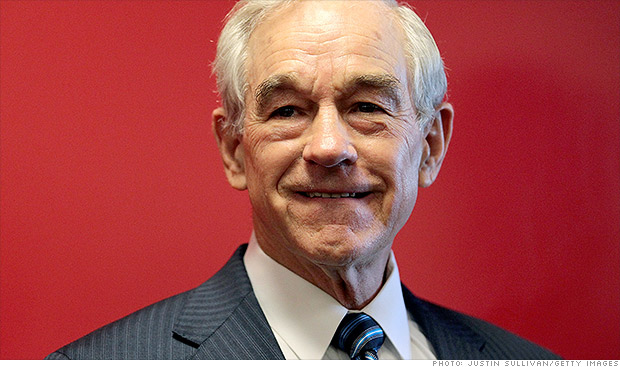
“In April 2011, two years shy of its 100th birthday, the Fed held its first press conference in history in response to mounting criticism of its lack of transparency. In other words, the Fed felt that it had to walk out into the sunshine and defend itself. And, as no doubt part of the same public relations effort, recent Fed publications reveal a concerted effort to perpetuate the myth that the Federal Reserve System is not a central bank at all, but a system of banks that serve ‘our local communities.’ What’s different this time is that, with the help of the web, Ron Paul’s 2012 campaign, and of course, the Mises Institute, the Austrian School of economics is no longer an obscure and ignored minority.”
http://mises.org/daily/6613/Being-an-Austrian-Is-Easier-Than-Ever
The Bitcoin Central Bank’s Perfect Monetary Policy

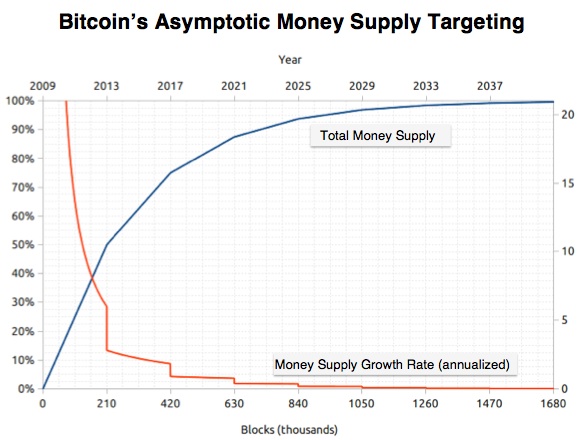
“The following post provides an analytical framework so that critics and proponents of Bitcoin’s monetary policy can engage in a constructive debate. Bitcoin has a central bank called the ‘Bitcoin network,’ which we will refer to as the Bitcoin Central Bank (BCB). This central bank issues a currency called ‘bitcoins’ and processes the transfer of bitcoins between accounts. The BCB’s rule-based monetary policy was set at its creation and its independence is secured by the distributed nature of the underlying network. This non-discretionary monetary policy can best be described as asymptotic money supply targeting (AMST).”
http://themisescircle.org/blog/2013/12/15/the-bitcoin-central-banks-perfect-monetary-policy/
Ron Paul: After 100 Years Of Failure, It’s Time To End The Fed
“A week from now, the Federal Reserve System will celebrate the 100th anniversary of its founding. Resulting from secret negotiations between bankers and politicians at Jekyll Island, the Fed’s creation established a banking cartel and a board of government overseers that has grown ever stronger through the years. One would think this anniversary would elicit some sort of public recognition of the Fed’s growth from a quasi-agent of the Treasury Department intended to provide an elastic currency, to a de facto independent institution that has taken complete control of the economy through its central monetary planning.”
G. Edward Griffin on Globalism, Collectivism and the ‘Right Principles’

“I think the most important thing we can do today is to recognize that our opponents are not evil because of their political party affiliation. They’re not our opponents because they’re evil or because they have this, that or the other thing. It’s because they have an ideal, a philosophy that they’re following. People mistakenly often just attack them because of the party labels – ‘Get rid of him. He’s a Democrat!’ or ‘He’s a Republican. Get rid of him!’ Who’s going to replace him? Somebody just exactly the same, with the same mindset. So it does no good to focus on personalities and names. We have to rise above that and focus on the ideas these individuals are pursuing.”
Stockman: GOP made budget deal a ‘joke and betrayal’

“Stockman added that the budget deal means lawmakers would take a ‘two-year vacation’ from dealing with the country’s fiscal situation and revisit it in 2015 at around the same time as the Iowa straw polls. Without an incumbent in the presidential race, both political parties will be too busy to touch the budget, he said. Stockman compared the accord to ‘kicking the can’ into ‘low Earth orbit.’ The two-year deal averts deeper cuts to military spending, but Stockman said that’s where lawmakers should have looked for savings. The U.S. no longer faces threats from developed countries and has been ‘fired as the world’s policemen,’ he said.”
Money for Nothing: Inside the Federal Reserve (2013)

“Nearly 100 years after its creation, the power of the U.S. Federal Reserve has never been greater. Markets and governments around the world hold their breath in anticipation of the Fed Chairman’s every word. Yet the average person knows very little about the most powerful – and least understood – financial institution on earth. Money For Nothing is the first film to take viewers inside the Fed and reveal the impact of Fed policies – past, present, and future – on our lives. Join current and former Fed officials as they debate the critics, and each other, about the decisions that helped lead the global financial system to the brink of collapse in 2008. And why we might be headed there again.”