“Indeed, the U.S. has carried out regime change in the Middle East and North Africa for six decades.”

Did you like this?
Tip Freedomwat.ch Staff with Bitcoin
Tip Freedomwat.ch Staff with Bitcoin

“Indeed, the U.S. has carried out regime change in the Middle East and North Africa for six decades.”
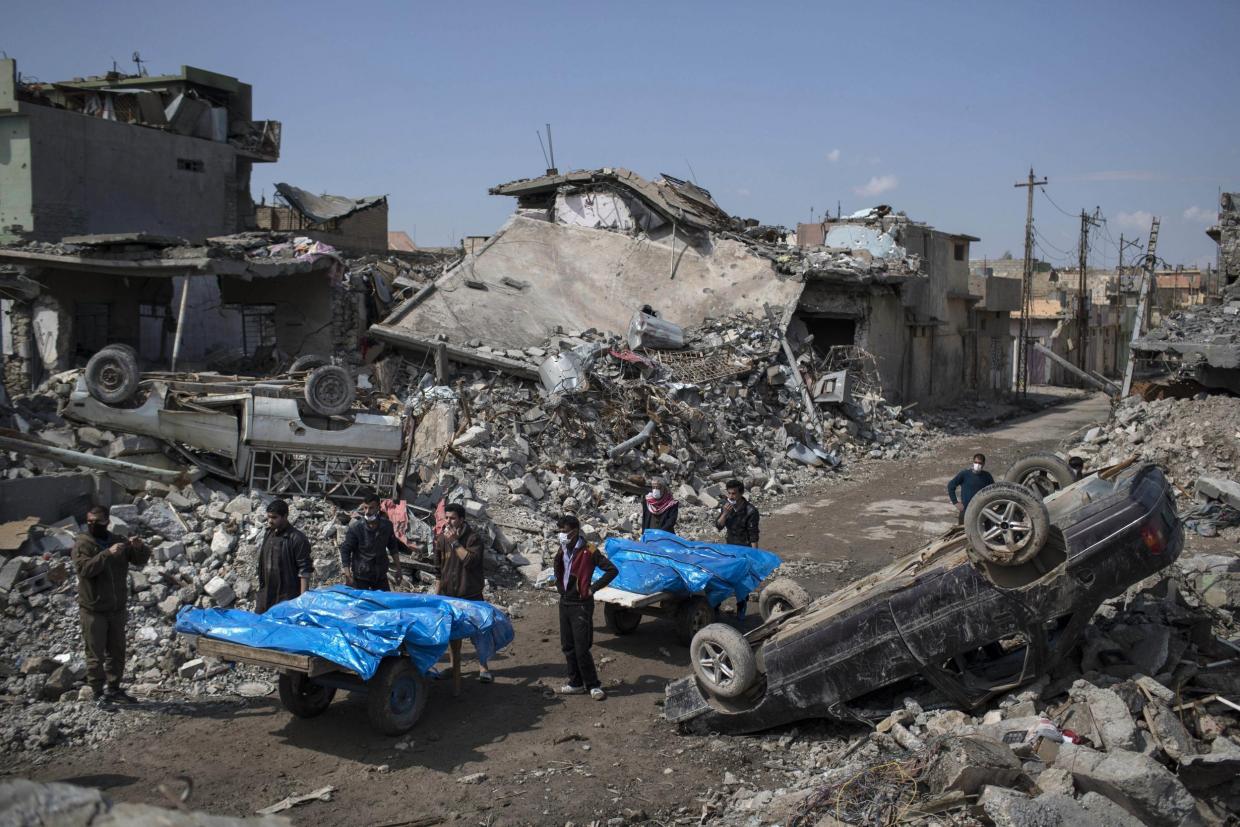
The Pentagon has admitted to an airstrike that is believed to have killed more than 200 civilians in the northern Iraqi city of Mosul, at the edge of the autonomous Kurdistan region.
In the 1980s, Kurdistan was targeted by Saddam Hussein, then-president of Iraq, because the Kurds supported Iran in the Iran-Iraq War. After his capture in the second Gulf War, Hussein was charged by the U.S. occupational government with genocide, convicted, and hung for his crimes.
What is lesser known is that at the same time, the U.S. government, still fuming after the humiliation of the Iran hostage crisis (a populist reaction to the brutality of the U.S.-backed dictator Mohammad Reza Shah, and a major factor in Ronald Reagan’s victory in the 1980 presidential election), was a major – and thoroughly documented – supporter of Hussein in the war:
Iraq began receiving support from the United States and west European countries as well. Saddam was given diplomatic, monetary, and military support by the US, including massive loans, political clout, and intelligence on Iranian deployments gathered by American spy satellites. The Iraqis relied heavily on American satellite footage and radar planes to detect Iranian troop movements, and they enabled Iraq to move troops to the site before the battle.
With Iranian success on the battlefield, the US made its backing of Iraq more pronounced, supplying intelligence, economic aid, and dual-use equipment and vehicles, as well as normalizing its intergovernmental relations (which had been broken during the 1967 Six-Day War). President Ronald Reagan decided that the United States “could not afford to allow Iraq to lose the war to Iran”, and that the United States “would do whatever was necessary to prevent Iraq from losing the war with Iran”. Reagan formalised this policy by issuing a National Security Decision Directive to this effect in June 1982.
In 1982, Reagan removed Iraq from the list of countries “supporting terrorism” and sold weapons such as howitzers to Iraq via Jordan and Israel. France sold Iraq millions of dollars worth of weapons, including Gazelle helicopters, Mirage F-1 fighters, and Exocet missiles. Both the United States and West Germany sold Iraq dual-use pesticides and poisons that would be used to create chemical and other weapons, such as Roland missiles.
Although the U.S. government began to play both sides a few years later in the Iran-Contra affair, the CIA nevertheless threw its support heavily to the Iraqi government utilizing internationally banned chemical weapons in its campaign against Iran.
Precursors to chemical weapons, as well as biological weapons, cluster bombs, and the loans to pay for them, were brokered to Iraq by pharmaceutical representative Donald Rumsfeld, who would later be appointed Secretary of Defense in the George W. Bush administration. The Bush administration would go on to invade Iraq in 2003 citing as a primary motivation its possession of such “weapons of mass destruction”.
By 2014 it became well known that many a true word was spoken in such jest: Iraq did in fact have WMDs, and they were obtained from the United States itself. (The truth, however, was revealed in the context of whipping up a new war against the terrorist organization ISIL, so the media still gets zero points for honesty.)
Until now, the Kurds have been major supporters of U.S. interests in the Middle East, perceiving the U.S. as a liberator and protector pursuant to their darkest hour in 1988.
Is the U.S. military going to burn one of its few remaining bridges in the Middle East by invoking the “collateral damage” doctrine in this instance? How will Kurds, tough fighters to the core, react to their family members being wiped out in reckless bombings?

“Online stock trading app Robinhood, whose core demographic has an average age of 30, says that Thursday was its biggest day ever, and that 43% of all its traders that day went for Snap stock. ‘Snap’s IPO revitalized investing among the younger generation,’ notes Baiju Bhatt, the co-founder of Robinhood. ‘We also saw a surge in new accounts, with many new customers opening up their first brokerage account.’ The median age of Robinhood investors buying Snap on Robinhood has been 26, the same age as Snap CEO Evan Spiegel.”
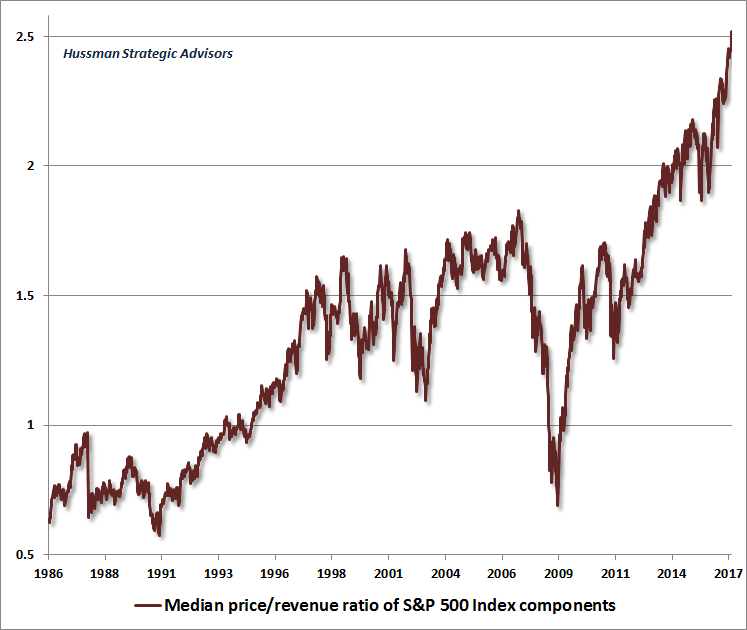
“As long as investors are comfortable with expected S&P 500 10-12 year total returns of less than 1% annually, with likely interim losses on the order of 50-60%, investors are free to label this situation as ‘fairly valued’ or with any other phrase they wish.”
Read more: https://www.hussmanfunds.com/wmc/wmc170306.htm
NORML reports that White House Press Secretary Sean Spicer declared war on much of the cannabis community yesterday when he announced the the Trump administration intends to engage in the ‘greater enforcement’ of federal anti-marijuana laws in the eight states that have legalized and regulated its adult use.
In resuming this regressive policy, Trump stands with a shrinking minority. Again, according to NORML, fifty-nine percent of voters say that adults’ use of marijuana should be legal while a whopping 93 percent support the medical use of marijuana. Perhaps most importantly, 71 percent of voters — including strong majorities of Democrats, Republicans, and Independents — say that they ‘oppose the government enforcing federal laws against marijuana in states that have already legalized medical or recreational marijuana.’
At the Mises Institute, Ryan McMaken points out that 81 percent of all drug arrests are for simple possession, defining the renewed war on marijuana as a war on personal choice. Since Trump has sided with the police regarding civil asset forfeiture and praised Philippine president Rodrigo Duterte’s anti-drug death squads, drug-war abolitionists can likely expect little help from the Trump administration over the next several years.
“A joint U.S.-Japanese statement said the U.S. commitment to defend Japan through nuclear and conventional military capabilities is unwavering. The statement amounted to a victory for Abe, who came to Washington wanting to develop a sense of trust and friendship with the new U.S. president and send a message that the decades-old alliance is unshakeable. Japan got continued U.S. backing for its dispute with Beijing over islands in the East China Sea that China also claims. The statement said the two leaders affirmed that Article 5 of the U.S.-Japan security treaty covered the islands, known as the Senkaku in Japan and the Diaoyu in China.”
Read more: http://www.reuters.com/article/us-usa-trump-japan-idUSKBN15P17E

“Lately, there’s been a lot of rhetoric comparing Donald Trump to Adolf Hitler. The concern is that a Nazi-type regime may be rising in America. That process, however, began a long time ago. In fact, following the second World War, the U.S. government recruited Hitler’s employees, adopted his protocols, embraced his mindset about law and order, implemented his tactics in incremental steps, and began to lay the foundations for the rise of the Fourth Reich.”

“Previously, only convicted individuals could be required to wear the device used to monitor location and movements. With the cabinet proposal, ‘Gefährder,’ or people who pose a security threat, who have not been convicted can be forced to wear the device by order of the Federal Criminal Police Office (BKA).”
Read more: http://www.dw.com/en/germany-approves-electronic-ankle-bracelets-to-monitor-extremists/a-37365188
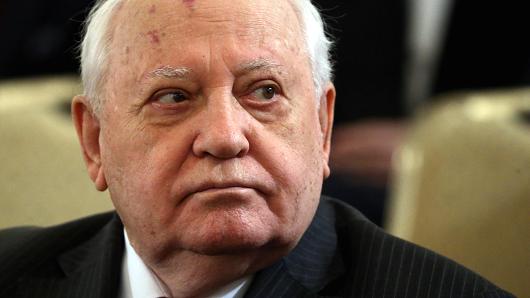
Former Soviet Union President Mikhail Gorbachev urged Donald Trump and Vladimir Putin to ban nuclear war in a TIME op-ed, lamenting the “militarization of politics” and indicating a “special responsibility” for the two leaders in preventing a new world war. However, Trump has committed to an enormous military spending binge in campaign statements and an executive order signed Friday.
Gorbachev effectively presided over the Soviet Union from 1985 until it collapsed in 1991. In 1986, the Soviet Union agreed to an arms reduction treaty with the US, and in 1988 abandoned the disastrous proxy war in Afghanistan fought against the CIA-supported mujahideen, members of whom later formed al-Qaeda, a group the CIA would find itself fighting less than a decade later.
Via Mises.org:
Meanwhile, the Pentagon doesn’t know what happened to more than six trillion dollars spent in recent years. And, the Pentagon’s own report admits the Pentagon wasted $125 billion (more than one-sixth of an entire year’s budget) in “administrative waste.” And that’s just the tip of the iceberg. As the Fiscal Times notes, “The Pentagon has never completed an audit of how they actually spend the trillions of dollars on wars, equipment, personnel, housing, healthcare and procurements.”
[..]
Although defense spending has been falling since 2010, it remains in real terms well above where it was in the 1980s, back when the CIA was telling us how the Soviet Union was an economic powerhouse.
Unfortunately, in his effort to raise military spending above even the all-time highs, McCain may gain some traction with the Trump administration, because Trump himself has called for even more military spending.
Among Trump’s pet projects, it seems, is his call for big increases in spending on the Navy and other forces that are allegedly in decline. Back in September, Trump was already calling for a major military buildup in both personnel and naval equipment.
Via Washington Post:
Trump’s proposals for the military during his presidential campaign were drawn heavily from the conservative Heritage Foundation, and could cost between $55 billion and $90 billion per year, according to outside experts. The plan included adding tens of thousands of soldiers until the service reaches 540,000, expanding the Navy’s fleet to have at least 350 ships, adding about 100 Air Force fighter or attack jets until the service reaches 1,200, and increasing the number of Marine Corps infantry battalions from 24 to 36, which would include thousands of Marines.
The growth would have the most significant short-term effects on the Army, which shrunk under President Barack Obama from 540,000 soldiers in 2013 to 470,465 at the end of November — the smallest number since before World War II. Obama wanted to shrink the Army even more to 450,000 soldiers by fall 2018, but Congress stopped that with a provision in the National Defense Authorization Act that directed the Army to grow to 476,000 this year.
Maj. Gen. John G. Ferrari, the Army’s director of program analysis and evaluation, said in an interview that his service is “shovel-ready” for growth in part because of the way it downsized. For instance, rather than completely ending the manufacturing of weapons like the M1 Abrams tank, the service continued to buy them in small quantities so the Army could keep open its plant in Lima, Ohio.
“We made some calculated decisions, the Army did, on how we were going to get smaller,” Ferrari said. “We really looked at how we were going to scale down so that we could scale up again.”
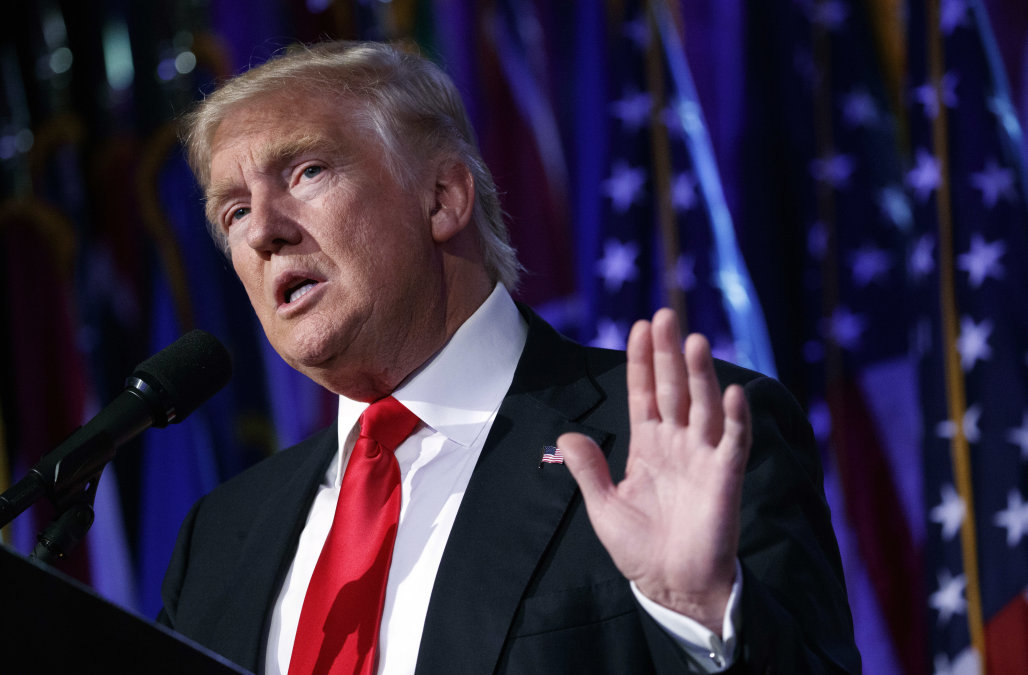
Donald Trump’s grandfather Friedrich Trump was banned from Germany for failing to complete mandatory military service. Appeals to his local prince fell upon deaf ears.